By Tim Donovan
Updated October 25, 2026: This list is an archive of the resources that shaped the original author’s work, not a live ranking of active blogs. Some sites no longer post regularly. The “past 7 years” reference to Philip Bloom is from the original article. As of October 25, 2026, the original Planet5D URL no longer points to a filmmaking resource, and the Cine Summit domain is parked for sale. Those entries are historical, not current recommendations.
Each morning I wake up, get out of bed, make a cup of coffee, and spend 10-15 minutes reading before getting ready to leave for work. I use that sacred time to comb through my favorite video blogs; searching for everything from new camera reviews and color-grading tutorials to inspirational video pieces that can influence my work. Listed below are my top 5 favorite video blogs of all time.
Please note that neither Figmints nor myself have been paid by the blogs mentioned below to promote them. We are sharing them because they have had a huge impact on our work, and we hope you will find them just as useful. Also keep in mind that the rankings below are based on which blogs have been the most useful to me personally – You may find a different blog to take up your own #1 spot!
Without further ado, here is our list of the top 5 video blogs:
#1 HURLBUT VISUALS BLOG
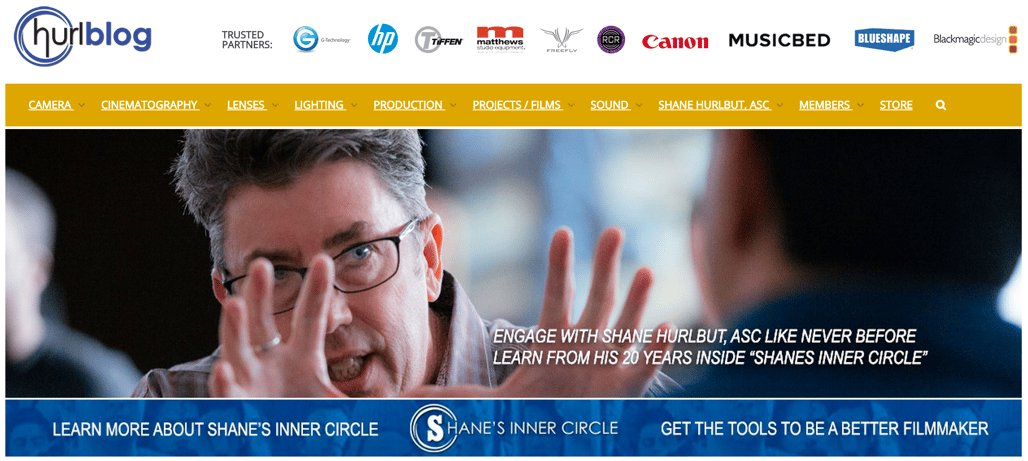
Founded by Shane Hurlbut, ASC Hurlbut Visuals is a blog for filmmakers and video production professionals at any point in their career. The blog covers camera, cinematography, lenses, lighting, production and sound topics, as well as Shane’s own personal and professional projects. Each category has a variety of content that spans theory, reviews, etiquette, workflows and pure inspiration.
I’m not as active in the forums as I used to be, but almost every time I’ve posted a question in the past, Shane has been kind enough to take the time out of his busy schedule to respond – not just to me, but to most people who post questions. There is also a member’s area where you can pay a monthly fee to join an exclusive group to receive even more invaluable content. I can’t speak highly enough about Shane, his team and his blog as it has changed my profession for the better.
#2 PHILIP BLOOM’S BLOG

“Philip Bloom is a world-renowned filmmaker who, for the past 7 years, has specialized in creating incredible film-like images with low-budget video.” That quote is an understatement. Philip has produced some of the most beautiful and inspiring work I have personally ever seen.
Each time I consider upgrading my cameras or lenses, I check Philip’s review videos to see what he has to say about them. Not because I’m incapable of making that choice myself, but because I trust him. And the reason I trust him is that he is a very ethical professional (if it wasn’t obvious by the strong ethics statements on his website & blog.)
If I can spend 15 – 30 minutes watching a full-camera review instead of spending hundreds of dollars to rent the same camera for a single day just to regret it later, that is an opportunity I will never let pass. Check out Philip’s blog if you haven’t already, you won’t regret it!
#3 VIDEO COPILOT

Video Copilot, founded by Andrew Kramer, is a company that creates tools and training for people who love motion design and visual effects. They’re not lying. I’ve learned more motion graphics techniques in a few hours watching their tutorial than I learned in an entire semester back in college. All you need to get started is a Mac or PC computer with Adobe After Effects. These videos are FREE. Don’t know a single thing about motion graphics? Watch this tutorial from them.
Are you an intermediate or advanced motion graphics artist? That’s fine, they have plenty of content to help you further flex your motion graphics muscles. Video Copilot has continued to be a fantastic resource for us, and I’m sure your motion graphics designers will agree.
#4 PLANET5D

Planet5D, founded by Mitch Aunger, aka “PlanetMitch,” focused on DSLR cameras that shot video, also known as HDSLRs. The original site offered more than a blog, drawing on a community of filmmakers who shared information about those cameras.
The original author valued Planet5D for its DSLR-video news, video logs, and forums. This describes the historical resource; its former URL no longer points to filmmaking content.
#5 CINE SUMMIT

Cine Summit was an online cinematography event that the original author valued for filmmaker presentations and production tips. This is a historical description; its former domain is now parked for sale.
So there you go, we just gave away our secret recipe for creating compelling, content-driven resources. Now that you have the resources to create your own amazing videos, get out there! For help planning a video project, contact Figmints.
Which production resource should you open first?
Pick a resource for the decision you need to make. Of the original five, only Philip Bloom and Video Copilot were verified as current filmmaking resources on October 25, 2026. The other entries are kept as history, not destinations to visit.
| Decision in front of you | Resource from the original list | Useful output after reading |
|---|---|---|
| Plan a lighting setup before a shoot | Hurlbut Visuals — historical; availability unverified | Use a current lighting source you can verify before relying on its advice |
| Compare a camera or lens for a specific scene | Philip Bloom | A shortlist of tradeoffs for that scene |
| Build a motion-graphics treatment | Video Copilot | A short style test before committing to the edit |
| Check whether an older DSLR-era technique still applies | Planet5D — historical; former URL no longer a filmmaking resource | Do not use the former URL; verify any technique against your current camera |
| Hear how other filmmakers solve a production problem | Cine Summit — historical; domain parked for sale | Do not use the former URL; bring a clear production question to the crew |
For a short donor story, the first decision is whose story it is and what the viewer should understand. A lighting tutorial is useful only after those choices. The production checklist is: define the audience, choose the story, list the scenes that prove it, then look up a technique for the shot that is hardest to make. That sequence keeps the roundup from turning into an equipment shopping list.
Start with the task that is blocking the film. Use a verified current resource such as Philip Bloom or Video Copilot when it fits the task, then test the result in a short sample. Figmints video production can help plan and produce the whole piece.