By Ian Hayes
Digital marketing for churches means using your website, search, social media, email, content and online ads to reach your congregation and welcome new visitors. Start with a plan built on your church’s values, a few clear goals and a defined audience.
Digital marketing for churches is how a church stays in touch with current members and reaches people who haven’t visited yet. The internet gives you plenty of ways to do both.
A good online presence starts with a plan that covers your church website, social media and community engagement. Your marketing should sound like your mission and values. Analytics tell you what is working and what isn’t, so you can adjust.
Content that is useful and friendly builds trust over time. Blog posts, video messages and online events all give people a way to connect with your church beyond Sunday morning.
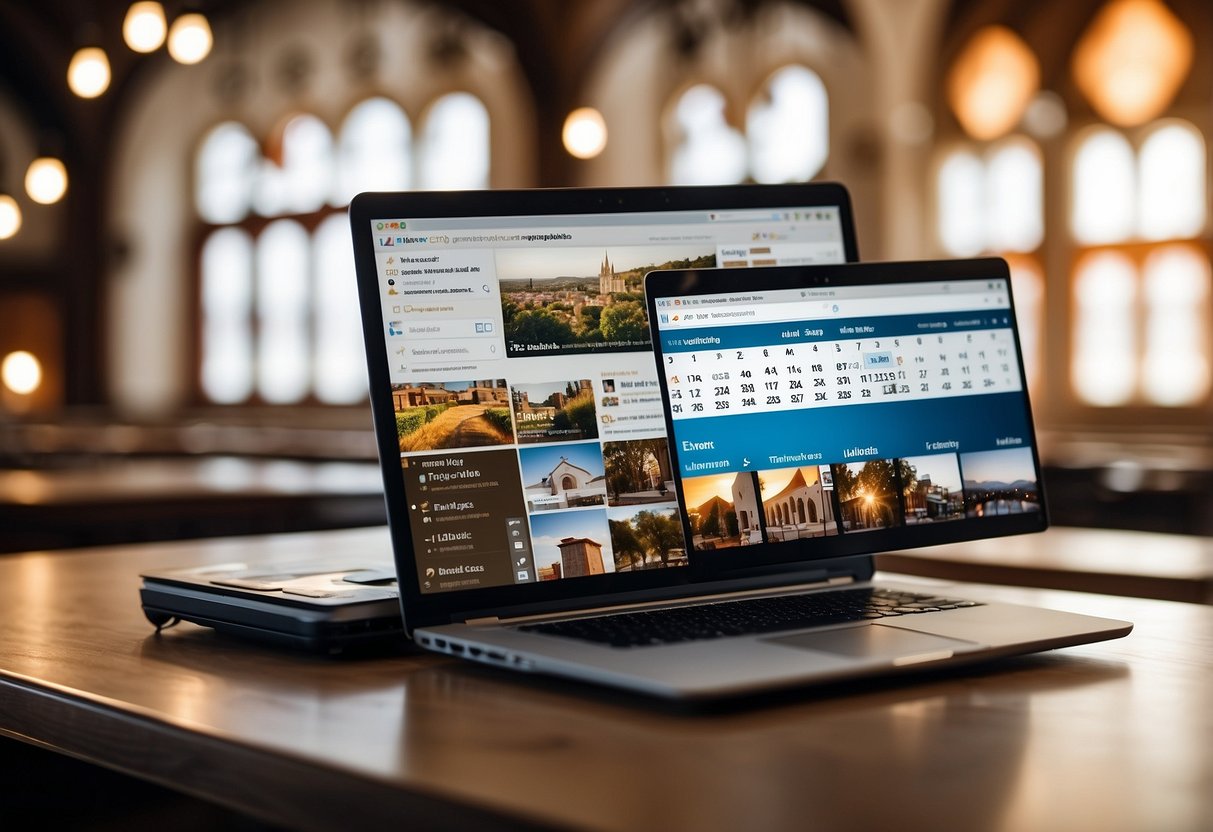 A church marketing plan has five parts: your church’s values, clear goals, a target audience, a good website and SEO basics.
 Combine good content with real involvement in your community. Social media, email, content, digital ads and online events all help your church stay close to members and reach new people.
The short version
- Digital marketing helps people find your church online.
- Your plan should match your church’s mission and values.
- Useful content builds trust and community connections.
A simple first step is to check what a newcomer sees: service times, location, accessibility details and a clear way to get in touch. Then choose the channels your team can keep current. For an example of our work with a faith-based organization, see our C12 case study.
How do you build a church marketing plan?
A church marketing plan has five parts: your church’s values, clear goals, a target audience, a good website and SEO basics.
Identifying Your Church’s Values
Start with what makes your church different. It might be your outreach programs, pastoral care, worship style or work in the neighborhood. Say so plainly in your marketing. Make a list of your core values and how each one helps the community. That list makes it easier to write messages that sound like you, and it gives a visitor a reason to come or to support the church.Setting Clear Online Marketing Goals
Write down what you want your digital marketing to do, and pick goals you can measure. Examples of goals:- Increase website traffic by 25% within six months.
- Grow social media followers by 15% each quarter.
- Gather 100 new email sign-ups monthly.
Target Audiences and Demographics
Think about who you want to reach: your current members and the people who might visit. Consider factors such as:- Age
- Location
- Interests
- Family status
Creating an Engaging Church Website
Your church website is often the first thing a visitor sees. Make it easy to use and easy to read. Things to include:- Clear navigation
- Up-to-date service times
- Event calendars
- Contact information
- A welcoming message
Implementing SEO Strategies
SEO (Search Engine Optimization) helps people find your church when they search. Use it to rank higher in search results. Steps to improve SEO:- Use relevant keywords in your content, such as “community services” or “Sunday worship”.
- Optimize page titles, headings, and meta descriptions.
- Ensure your website is mobile-friendly and has fast load times.
- Create high-quality content that addresses the needs and interests of your target audience.
How can a church build engagement online?
Combine good content with real involvement in your community. Social media, email, content, digital ads and online events all help your church stay close to members and reach new people.
Using Social Media
Social platforms like Facebook, Instagram, X (formerly Twitter) and YouTube let a church talk with its community. Regular posts about upcoming events, sermon highlights and encouraging messages get people engaged. Try stories, live streaming and interactive content like polls and Q&A sessions. That keeps your feed lively and gives members something to join in on and share.Email Marketing
Email is a dependable way to reach your congregation. Send newsletters with church events, sermon series and community outreach. Personalize them, and describe your ministries in plain, specific detail. Add a clear call to action, such as joining an online event or volunteering. Regular email keeps people connected.Creating Content People Want to Read
Content people want keeps their attention. Share articles, videos and podcasts on gospel teaching, Christian living and community stories. Infographics and graphics help too. When your content is useful and easy to relate to, people trust you and share your posts.Reaching New People with Ads
Digital advertising, including Google Ads and Facebook Ads, can widen your reach. Target specific demographics and areas to reach new people. Promote events, sermon series and outreach programs. Give each ad a good image and a clear call to action. Ads make your church easier to find and give people a nudge to explore it.Hosting Online Events
Online events help people feel part of the community. Try virtual Bible studies, prayer meetings and live-streamed services. Q&A sessions with pastors and digital discipleship groups work well too. Promote them through your other channels so people know about them. They’re also an easy way to stay connected for members who can’t attend in person.Frequently Asked Questions
Quick answers to common questions about digital marketing for churches.How can a church use digital marketing to reach more people?
- Churches can reach more people by putting useful content online.
- That can be videos and blog posts about your mission and activities.
- Live streaming services and events can bring in a larger audience too.
Which social media platforms work best for churches?
- Facebook and Instagram are the usual starting points for connecting with your community.
- They let you post updates, share live video and reply to comments.
- YouTube works well for sermons and other video.
How can a church improve its online marketing?
- Define your goals and your target audience.
- Create and share content that speaks to that audience.
- Build a user-friendly website, optimize it for search engines and update your social pages regularly.
How can a marketing consultant help a church?
- A marketing consultant brings experience and an outside view.
- They can help build a marketing strategy, improve your online content and put best practices in place.
- That guidance can strengthen your digital outreach.
How can AI help with church marketing?
- AI can automate tasks like scheduling social media posts, analyzing engagement data and personalizing content for different audience groups.
- AI tools can also show how your audience behaves, so your decisions rest on data.
What should a church look for in a marketing agency?
- Look for experience with nonprofit and religious organizations.
- Find an agency that understands your mission and can build its strategy around it.
- Ask for proven results, and make sure communication is clear and open.
Figmints is a Providence, RI marketing agency for churches, ministries, nonprofits and faith-driven organizations. C12 and Tremont Temple are among our clients. See how we rebranded C12 or read about our faith-forward marketing work.
CallHub’s guide has more on digital marketing for churches.